On a Friday night in March, I sat down with absolutely no plan beyond “I want to launch one digital product by Sunday.”
Not because Sunday was a meaningful deadline. I’d just noticed I’d been thinking about doing this for about four months without actually doing it, and I was tired of the thinking phase. So I gave myself a weekend and decided whatever I built in that window was what I was launching — no more research, no more “just one more YouTube video about it first.”
What follows is exactly what happened over that weekend and the six weeks after it, including the parts that went wrong, the number that made me want to give up around day ten, and the specific thing that turned it around. I’m walking through one real product launch, start to finish, rather than giving you a generic checklist — because watching the actual decisions in order is more useful than a list of steps with no context for how messy the in-between parts really are.
Related: Best Digital Products to Sell Online
Friday Night: Picking the Idea

I didn’t brainstorm fifty ideas. I asked myself one question: what’s something I’ve solved for myself that other people clearly haven’t figured out yet?
The answer came from my own freelancing. I’d built a simple client intake system — a set of forms and a process for onboarding new clients — after one too many projects started with a vague, confusing brief that wasted everyone’s time. It worked well enough that two other freelancers I knew had asked me to send them my templates.
That was the signal. If two people unprompted had asked for it, more people probably needed it.
The idea: A “Freelancer Client Onboarding Kit” — a welcome email template, a project intake questionnaire, an invoice template, and a simple 30-day communication checklist.
I spent maybe twenty minutes deciding this was the idea. I didn’t do extensive market research. I had real evidence (two unprompted requests) and a personal understanding of the problem. That was enough to move forward.
Saturday Morning: Building It
I opened Canva at around 9am with a coffee and a rough mental outline: four documents, each solving one specific part of the onboarding problem.
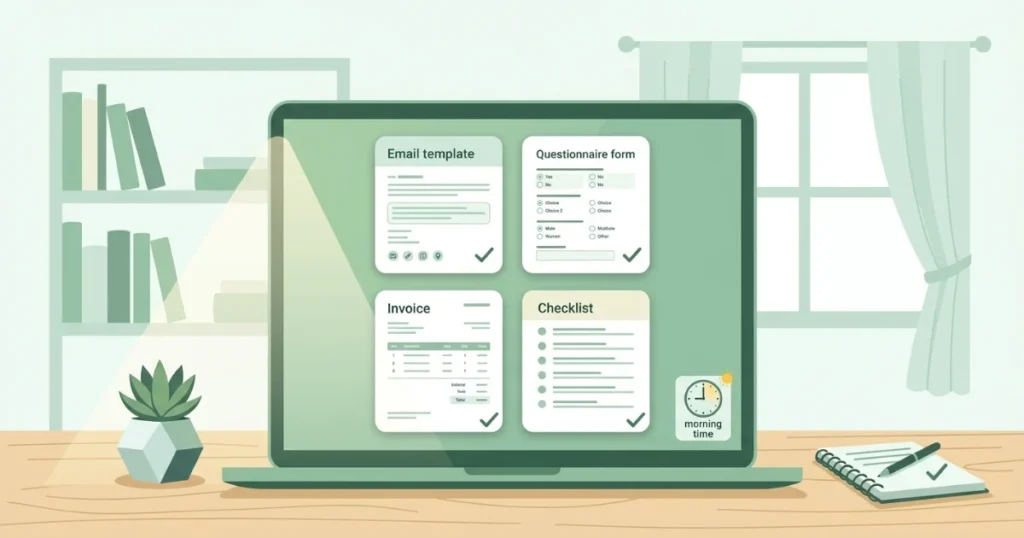
What I actually built, in order:
- Welcome email template — a fill-in-the-blank email a freelancer sends a new client right after signing, setting expectations clearly.
- Project intake questionnaire — a structured set of questions covering scope, timeline, communication preferences, and goals, designed to prevent the vague-brief problem I’d personally experienced repeatedly.
- Simple invoice template — clean, professional, with placeholder fields for project details and payment terms.
- 30-day communication checklist — a simple guide for what to check in on and when, across the first month of a new client relationship.
I built each one in Canva, using a free template as a starting point and adjusting fonts and colors to be consistent across all four documents. Two fonts, one accent color, simple layout. Nothing fancy.
By 1pm, I had a rough draft of all four. By 4pm, after a break and a second pass, they were genuinely usable.
The mistake I made here: I almost talked myself into adding a fifth document — a “client offboarding template” — because it felt like the kit wasn’t “complete” without it. I caught myself and stopped. The kit didn’t need to be exhaustive. It needed to solve the specific problem I’d identified, and a fifth document would have eaten another two hours for marginal added value. Scope discipline mattered more than completeness here.
Saturday Evening: Writing the Listing and Setting Up the Sale
I chose Gumroad for this one. No existing audience on Etsy-style platforms for this kind of B2B-leaning product, and I wanted simplicity — upload, set price, get a link.
Setting up the Gumroad account took about fifteen minutes: create account, verify email, connect a bank account for payouts.
Writing the product title: I went through three versions.
First attempt: “Freelancer Toolkit.” Too vague — could mean anything.
Second attempt: “Client Onboarding Templates for Freelancers.” Better, more specific.
Final version: “Freelancer Client Onboarding Kit — Welcome Email, Intake Form, Invoice & Communication Checklist Templates.” Longer, but it tells a potential buyer exactly what’s inside before they even click.
Writing the description: I opened with the actual problem, not a generic intro:
“If your freelance projects keep starting with a confusing, back-and-forth brief that wastes the first week, this kit fixes that. Four ready-to-use templates that take the guesswork out of onboarding a new client — so you start every project clear, organized, and looking professional from message one.”
Then a bulleted list of exactly what’s included, followed by a short note on format (editable in Canva, with a Google Docs version of the text-based pieces for anyone without a Canva account).
Pricing: I set it at $17. Not based on rigorous calculation — based on a quick check of similar productivity template packs on Gumroad and Etsy, most of which sat between $12 and $25. I picked a number in that range that didn’t feel like I was either giving it away or overcharging for a first product with zero reviews.
Cover image: Created in Canva, showing a clean mockup of the four documents laid out, with text overlay stating clearly what the product was.
By 9pm Saturday, the listing was live.
Related: Start an Etsy Shop and Get Your First Sale
Sunday: The First Promotion Push

I’d committed to launching by Sunday, and technically I had — the product existed and was purchasable. But existing and being found are very different things.
What I actually did Sunday:
Posted in two Facebook Groups for freelancers, with a short, honest description of what I’d made and why, plus the link. Not a hard sell — just “I made this because I kept running into this exact problem, thought it might help others too.”
Posted on my personal LinkedIn, framing it the same way — a genuine problem I’d solved, not a sales pitch.
Sent it to four freelancer friends directly, including the two who’d originally asked for my templates, letting them know it was now a polished, purchasable version of what they’d seen.
Sunday’s results: Two sales. $34 total, minus Gumroad’s fee. Genuinely exciting in the moment — proof the idea worked at all.
Week One: The Slow, Slightly Discouraging Middle
After the initial flurry from people I’d directly told, things went quiet. Days two through seven of the first week: zero additional sales.
This is the part most “I launched a product and made $X” stories skip entirely, and it’s the most important part to be honest about.
I checked the Gumroad dashboard probably six times a day during this stretch, which did nothing except make the silence feel louder. By around day ten, with still only those original two sales, I genuinely considered whether the idea just didn’t have legs.
What I did instead of giving up:
I looked honestly at where my initial traffic had come from (direct messages and two Facebook posts) and recognized I hadn’t actually built any ongoing traffic mechanism. Two Facebook posts are a moment, not a system. I needed something that kept working after the initial post scrolled away.
Week Two: Building an Actual Traffic System
This is the turning point, and it’s the part I wish I’d done before launching rather than after.
What I built in week two:
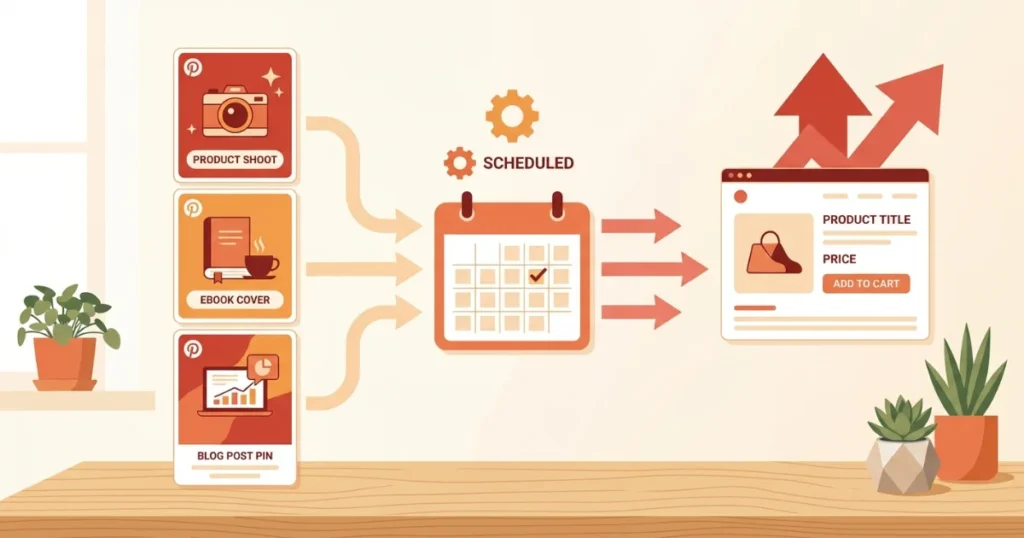
Three Pinterest pins, created in Canva, each showing a different angle of the product (one focused on the welcome email template, one on the overall kit, one specifically targeting “freelance client onboarding” as a search phrase). I wrote keyword-rich descriptions for each — phrases like “freelance client onboarding template” and “freelancer intake form template,” based on what I found when I typed similar terms into Pinterest’s own search bar.
I scheduled these pins using Pinterest’s native scheduler (free), spacing them out over the following two weeks rather than posting all three at once.
I also went back and improved my Gumroad listing based on the two reviews I’d gotten — adding a line addressing a question one buyer had asked me directly (“does this work for non-Canva users?”) directly into the listing description, since if one buyer asked, others were probably wondering the same thing silently.
Why I hadn’t done this before launching: Genuinely, impatience. I wanted to launch by Sunday and treated traffic-building as a “figure it out after” problem. In hindsight, sketching even a basic Pinterest plan before launch would have meant week one wasn’t quite so quiet.
Weeks Three to Six: Watching It Actually Start Working
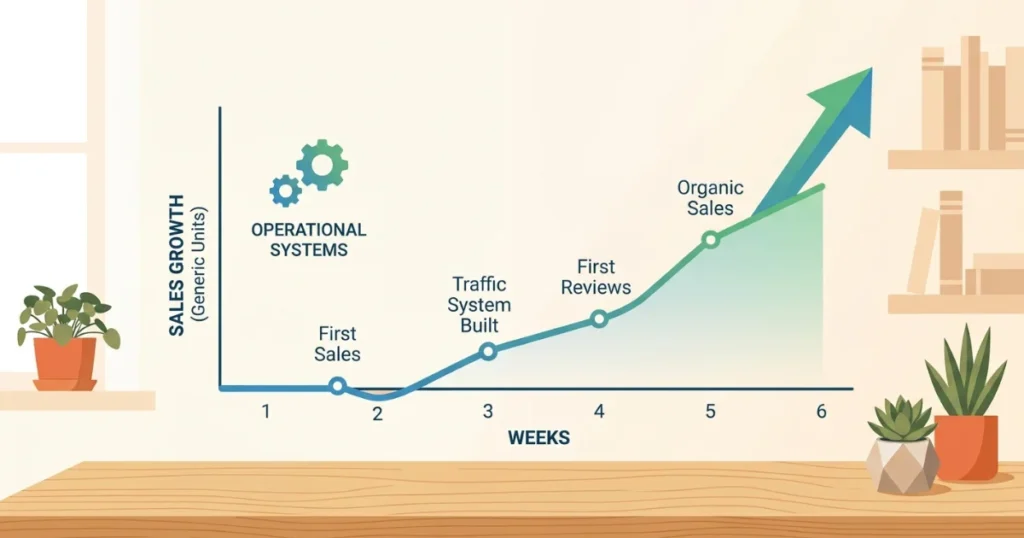
Week three: Three sales. Two of them, when I checked Gumroad’s basic analytics, came from a Pinterest referral — the pins were starting to do something.
Week four: Five sales. At this point, I asked my two original buyers (the ones from launch weekend) if they’d be willing to leave a quick review, explaining honestly that it would help others find the kit. Both said yes.
Week five: Six sales, and for the first time, a sale from someone I had zero direct connection to — meaning it came entirely from either Pinterest or someone sharing the product independently. That one sale, oddly, felt more significant than the larger numbers, because it was the first real proof the product could sell without me personally pushing it.
Week six: Seven sales, plus I created two additional Pinterest pins based on which existing pin descriptions seemed to be getting the most saves (a signal visible in Pinterest’s free analytics).
Six-week total: 25 sales, $425 before Gumroad’s fee, landing around $383 after.
Not a dramatic success story. A genuinely real, modest result from one weekend of building and six weeks of consistent small efforts afterward.
Related: Etsy SEO Tips for Digital Products: How to Rank Your Listings Fast
What I’d Do Differently Starting Over
Build the traffic plan alongside the product, not after. The quiet first ten days would have been shorter and less discouraging if Pinterest pins had existed from launch day rather than starting in week two.
Ask for reviews earlier and more directly. I waited until week four to ask my first buyers for reviews. They would have said yes in week one just as readily — I just hadn’t asked.
Resist the urge to check the dashboard constantly. Checking sales six times a day during the quiet stretch added stress without adding information. Checking once a day, or even every few days, would have given the same data with less anxiety.
Start the second product sooner. By week six, I understood my audience and what messaging worked well enough to have started building a second, related product (a client offboarding kit, ironically — the thing I’d cut from the original scope) somewhere around week three. I didn’t start it until week eight, losing some of the momentum from having an engaged early audience already paying attention.
The Actual Lessons, Generalized
Looking back at this one specific launch, a few things turned out to be true beyond just this product:
Real evidence beats imagined demand. The two unprompted requests from other freelancers were worth more than any amount of speculative brainstorming about what “might” sell.
Launch week tells you almost nothing. The two Sunday sales from people I knew directly said nothing about whether the product could sustain itself. The real test came in weeks three through six, once direct favors ran out and actual discoverability had to do the work.
Traffic is not optional, and it’s not automatic. Building the product was, genuinely, the easier half of this process. The six weeks of consistent small traffic-building actions (Pinterest pins, listing improvements, review requests) mattered more to the eventual outcome than the initial product quality.
Small, specific products work. The kit succeeded because it solved one clear, specific, recognizable problem — not because it was comprehensive. The fifth document I almost added wouldn’t have changed the outcome; the early traffic-building work would have, had I started it sooner.
If You Want to Run Your Own Version of This Weekend
Based on exactly what worked and didn’t, here’s the compressed version:
Before your build weekend: Identify a problem you’ve personally solved that at least one other person has asked you about. Sketch (even roughly) where you’ll post about it once it’s live — specific Facebook Groups, specific people you’ll message directly, and a basic plan for ongoing traffic (Pinterest is the most accessible for most niches).
Build weekend: Outline before designing. Build the smallest complete version of the idea, not the most comprehensive one. Resist scope creep.
Launch day: Tell people directly — friends, relevant communities, your own social presence. Expect this to generate a small initial burst, not sustained traffic.
The following two weeks: This is when most people quit, right as the initial burst fades and before any ongoing system has had time to work. Build your traffic system now if you haven’t already — Pinterest pins, improved listing SEO, requests for reviews from your first buyers.
Weeks three through six: Watch what’s actually working using whatever analytics your platform provides. Do more of that specific thing. Start thinking about your second related product around week three or four, not after the first has fully matured.
Final Thoughts
The version of this story that gets told online usually skips straight from “I had an idea” to “I made $X passively.” The actual experience has a real, sometimes uncomfortable middle — ten days of silence, a moment of doubt, a system built reactively instead of proactively.
The product itself wasn’t complicated. The weekend wasn’t heroic. What actually generated the result was staying with it through the quiet stretch and building the unglamorous traffic mechanics that don’t show up in the highlight version of the story.
If you’re sitting on an idea you’ve been thinking about for months without starting — that Friday night feeling of “I’m just going to give myself a weekend” is worth recreating. Not because the weekend itself guarantees anything, but because it ends the thinking phase and starts the actual learning phase, which is the only phase that produces real data about whether your idea works.
FAQs
How long does it realistically take to make a first sale on a digital product?
In this case study, the first sales came within 24 hours — but specifically from people directly told about the launch, not from organic discovery. Organic, unprompted sales took roughly three to five weeks to begin appearing, once a real traffic system (Pinterest, in this case) had time to start working.
Is it normal for sales to go quiet right after launch?
Yes, and it’s one of the most common reasons people abandon a product too early. The initial launch burst from your direct network is not representative of ongoing organic demand, which usually takes several weeks to develop once a traffic system is in place.
Should I build my traffic plan before or after launching?
Before, ideally. This case study’s biggest lesson was that the traffic system (Pinterest pins, specifically) was built reactively in week two rather than proactively before launch, which extended the discouraging quiet period longer than necessary.
How important are reviews for a new digital product?
Significant. Reviews in this case study came from directly asking satisfied buyers, not automatically. Asking earlier (week one instead of week four) would likely have built social proof faster, which can influence undecided buyers browsing the listing.
Is $425 in six weeks from one product considered a success?
For a single product built in one weekend, with no prior audience and no paid promotion, this is a reasonable, realistic result — not exceptional, not a failure. The more meaningful outcome is the validated process and audience understanding that makes a second product faster and more confident to build.