
The first money I ever made from a blog was £12.40.
Not in the first week. Not in the first month. It arrived about five months after I started — an affiliate commission from a budgeting tool I’d mentioned almost as an aside in a post about managing a freelance income.
I remember checking my affiliate dashboard that morning and doing a genuine double-take. Then I sat there for about two minutes trying to decide whether it counted as “make money blogging” or just a fluke.

It counted. And it told me something important: the gap between starting a blog and making real money from it isn’t about luck or going viral. It’s about understanding that this thing compounds, and that the timeline is longer than most people expect — but predictable enough that you can plan for it.
That’s what this guide covers. Not the optimistic version. Not the fear-mongering version. Just the honest answer, based on what actually happens.
The Short Answer (For People in a Hurry)
Most bloggers make their first money between months four and eight. Meaningful, consistent income typically arrives between months nine and eighteen.
That’s the realistic range, not a ceiling. Some bloggers move faster — especially those in high-monetization niches who start affiliate marketing early or bring relevant experience from other work. Some take longer — particularly those who skip keyword research, publish without strategy, or drift between topics.
The range matters more than the midpoint. Knowing that you might be in month four of a twelve-month process is different from thinking month four means it isn’t working.
The Honest Month-by-Month Timeline
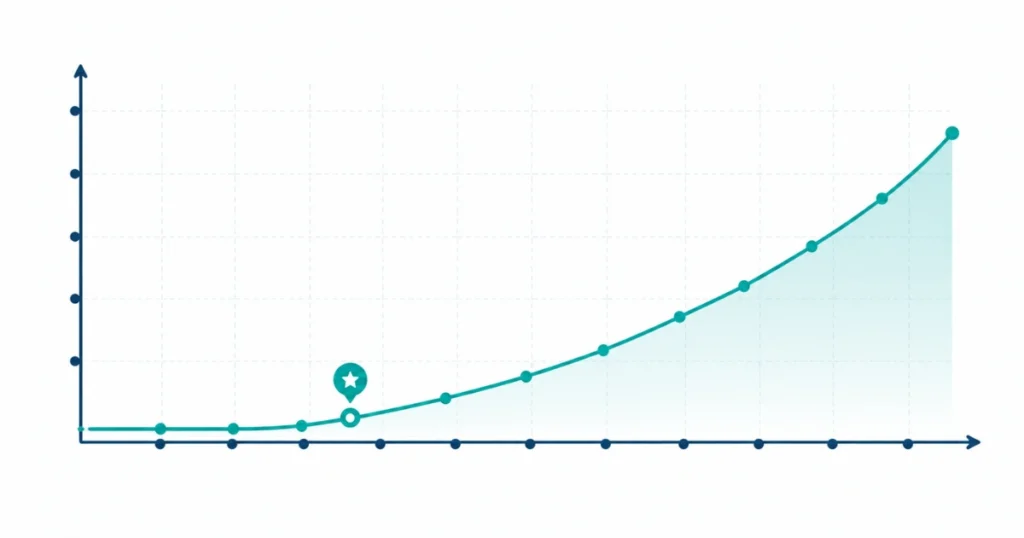
Here’s what the typical blogging income journey looks like, broken into realistic phases. These are ranges based on consistent publishing (two to three posts per week), proper keyword research, and basic on-page SEO in place.
| Phase | Months | What’s Happening | Realistic Income Range |
| Invisible phase | 1–3 | Writing, indexing, no meaningful traffic yet | $0 |
| First signals | 4–6 | Some posts start ranking, first affiliate clicks | $0–$100/month |
| Early earner | 6–9 | Organic traffic growing, affiliate income becoming consistent | $50–$400/month |
| Building phase | 9–12 | Multiple posts ranking, email list growing, income compounding | $200–$1,000/month |
| Scaling phase | 12–18 | Ad network eligibility, digital products, sponsored content possible | $500–$3,000+/month |
| Established | 18–24+ | Consistent organic traffic, diversified income, compounding continues | $1,000–$10,000+/month |
A few things to hold in mind when reading this table:
Niche matters enormously. A personal finance blogger with strong affiliate partnerships earns faster per visitor than a general lifestyle blogger. High-intent niches (finance, software, health) structurally earn more at the same traffic level.
These are ranges, not guarantees. A blogger publishing two heavily-researched, SEO-targeted posts per week will move through these phases faster than someone publishing sporadically with no keyword research.
“Consistent income” and “first money” are different things. First money can arrive early and unexpectedly. Consistent, reliable income takes longer — it’s the result of multiple posts ranking simultaneously, not one lucky post.
Why the First Three Months Feel Like Nothing Is Working
This phase has killed more blogs than any technical issue or bad niche choice.
You write. You publish. You share on social media. A few dozen people read it, mostly people who already know you. Then silence.
What’s happening technically: Google is crawling your posts, assessing them, and beginning to form an opinion about your site’s authority and topical relevance. New domains don’t rank immediately — this is sometimes called the “Google sandbox” effect. Your posts are being evaluated, not ignored.
What’s happening from a traffic perspective: organic search traffic almost never arrives in the first ninety days. The exception is very low-competition, highly specific keywords — some will rank within weeks. But for most posts targeting any kind of meaningful search volume, the window from “published” to “ranking on page one” is three to eight months.
The brutal truth: the effort you put in during months one through three is building the foundation for months seven through twelve. There’s no shortcut around it. Every post you publish during the invisible phase is a future traffic asset — you just can’t see it yet.
What Actually Speeds Up the Timeline
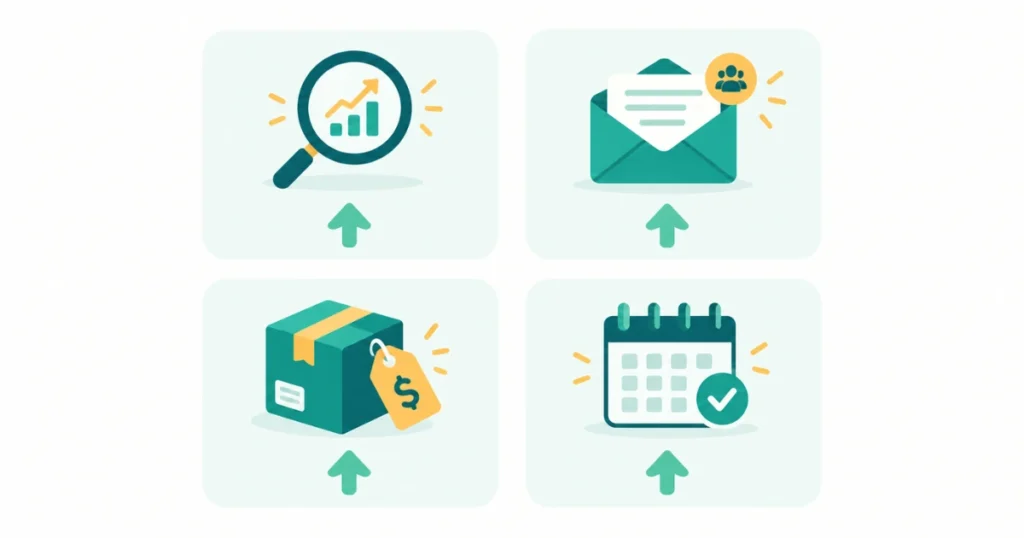
These are the variables that consistently separate bloggers who earn by month six from those who are still at zero in month twelve.
Keyword research before writing (not after)
This is the single highest-leverage thing a beginner can do. A post written around a specific, searchable, achievable keyword will rank faster and earn longer than a post written on a topic you feel like covering but nobody is searching for.
Before every post: Google the topic, check the autocomplete and People Also Ask suggestions, verify search volume and keyword difficulty using a free tool like Ubersuggest or Keywords Everywhere. If the keyword has less than 100 monthly searches or a difficulty score above 30 on a new domain, either pick a different keyword or go more specific.
Starting an email list immediately
The visitors who find your blog in months one through three might never come back unless you give them a reason to. An email list solves this. A subscriber who gets a notification when you publish a new post returns. They share your content. They buy your digital products later. They convert on affiliate links at higher rates because they already trust you.
Kit (formerly ConvertKit) has a free plan up to 1,000 subscribers, designed specifically for bloggers. Set it up before you publish your first post. Even two subscribers is two subscribers you’d otherwise have lost.
Choosing a niche with real monetization paths
Not all niches earn at the same rate, and understanding this before you start (rather than discovering it twelve months in) changes your entire trajectory. A personal finance blog with genuine affiliate opportunities — budgeting apps, investment platforms, financial tools — can reach $200/month at 3,000 monthly visitors. A general hobby blog might need 30,000 monthly visitors to earn the same from display ads.
The best blog niche ideas with real earning potential breaks down which niches have the strongest monetization structure for beginners.
Adding a digital product early
Affiliate marketing and ads both require traffic before they pay meaningfully. A digital product — a template, a short guide, a swipe file, a Notion planner — can earn from day one, with even a small audience.
The first time someone pays for something you made, the entire project feels different. A $19 Canva template or a $27 beginner guide sold ten times a month is $190–$270 you didn’t have to wait for Mediavine traffic thresholds to achieve.
Publishing consistently (not constantly)
Two well-researched posts per week beats five rushed ones. Consistency matters more than frequency. Google rewards sites that publish on a reliable cadence — it signals that the site is active and maintained.
What consistency actually means in practice: blocking time in your week for writing, having a content calendar built from keyword research so you never stare at a blank brief, and publishing on the same rough schedule even when results are slow.
What Slows Everything Down

Writing without keyword research. Every post you publish without a target keyword is a post that may never get organic traffic. This isn’t about writing badly — it’s about writing for yourself rather than for what your reader is searching for.
Picking a niche that doesn’t earn. Some niches have passionate readers and almost no monetization infrastructure. No affiliate programs. Low ad rates. No products to create. You can love your topic and still choose one where the financial ceiling is genuinely low. Know this early.
Trying to grow on too many channels at once. Splitting energy between Instagram, Pinterest, TikTok, Twitter/X, YouTube, and your blog simultaneously produces mediocre results on all of them. Pick one or two supplementary channels that fit your niche and do them properly.
Switching niches at month three or four. This is the peak temptation point — results are still invisible, and a different niche looks greener. In almost every case, the problem isn’t the niche. It’s that month three is simply too early to evaluate. The content written in months one through four often starts performing in months seven through ten.
Ignoring the email list. Every month you publish without collecting emails is a month of readers lost to the void. This is the one mistake that’s hardest to fix retroactively — you can’t go back and capture the readers who found your posts six months ago and never returned.
Expecting AdSense to be your first income stream. Display ads are a later-stage income source. A new blog with 2,000 monthly visitors earning AdSense rates will make approximately $3–$8 per month. Affiliate marketing works at much lower traffic levels — one right referral to the right product can earn more in a week than AdSense earns in a month at early traffic volumes.
The Different Ways Blogs Make Money (And When Each Becomes Realistic)
Understanding the income timeline also requires understanding which monetization methods become available at which stage.
Affiliate marketing — Available from day one. No traffic threshold. Even a handful of targeted readers clicking through to a product they were actively searching for can convert. This is typically the first real income stream for most beginner bloggers.
Display advertising (Google AdSense) — Available early but earns almost nothing until traffic scales. Google AdSense can be added any time, but RPMs (revenue per thousand impressions) are low for new sites. Meaningful ad income typically requires 10,000+ monthly visitors. Premium networks like Mediavine require 50,000 monthly sessions.
Digital products — Available from the moment you have something worth selling, even with a tiny audience. A small, highly engaged email list of 300 people can generate more digital product revenue than a 10,000-visitor-per-month blog that never captures emails.
Sponsored posts — Typically becomes realistic at 10,000–25,000 monthly visitors in a niche where brands advertise, or sooner for very focused niche blogs with engaged, specific audiences.
Paid newsletters and subscriptions — Available at any stage via platforms like Kit, Substack, or Ghost. Depends almost entirely on audience engagement quality rather than traffic volume.
The practical lesson: don’t wait for traffic milestones to start monetizing. Add affiliate links in posts from the beginning. Build your email list before you have traffic. Create a simple digital product in your first few months.
Your First Real Milestone to Aim For
Rather than staring at a far-off “full income” target and losing motivation in month three, I’d encourage you to focus on one milestone at a time.
Milestone 1: First $1. Trivial financially. Psychologically transformative. Proves the model works. This typically comes from a first affiliate click-through and conversion. Aim for this by month six.
Milestone 2: First $100 in a single month. This is where the compounding becomes visible. A post ranking for a specific, buying-intent keyword in your niche can do this alone. Aim for this by month nine or ten.
Milestone 3: First $500 month. Multiple income streams are typically active by this point — some affiliate income, possibly an ad network, possibly a small digital product. Usually months twelve to eighteen.
Milestone 4: Consistent $1,000+ months. The point where blogging starts to feel like a real business. Most bloggers who reach this consistently hit it between month eighteen and month thirty-six.
These aren’t invented numbers — they reflect a realistic progression for a blogger who publishes consistently with keyword research, builds an email list from the start, and doesn’t switch niches or abandon the project during the invisible phase.

The Question Under the Question
Here’s what most people are actually asking when they ask “how long does it take to make money blogging”:
Is this worth doing?
The honest answer: yes — if you treat it like the skill-building, long-game business that it is, not like a passive income button you press and wait for results.
The bloggers who make serious money from this aren’t the ones who got lucky or had a post go viral. They’re the ones who understood the timeline, kept publishing through the invisible months, made smart decisions about niche and monetization from the start, and let the compounding work.
The blog you start this month, with the right foundation, could be earning consistently before the end of next year. Most people don’t make it there — not because they couldn’t, but because they quit in month four when nothing had happened yet.
Month four is often exactly when the work is starting to compound. Don’t leave then.
If you’re setting up or revisiting your foundation, here’s how to start a blog that makes money — covering everything from setup to monetization strategy. And for a personalised estimate of what your specific niche, traffic level, and monetization mix could earn, the Blog Income Calculator runs the numbers for your situation.
Frequently Asked Questions
Q1: How long does it realistically take to make money from a blog?
Most bloggers earn their first income between months four and eight, typically through affiliate commissions on low but targeted traffic. Consistent, meaningful income — something you can rely on month to month — usually arrives between months nine and eighteen for bloggers who publish consistently with keyword research and proper SEO. Bloggers without a systematic approach often take significantly longer, or never reach consistent income.
Q2: Can you make money from a blog in the first month?
It is possible but uncommon. It would require an existing audience being brought to the blog, a pre-built email list from another platform, or a very specific post ranking immediately for a low-competition buying-intent keyword with an affiliate link in place. For most people starting from scratch, month one income is effectively zero — and that is normal and expected.
Q3: How much money can a beginner blog make in the first year?
A blogger who publishes consistently (two to three posts per week), uses keyword research before writing, starts affiliate marketing early, and builds an email list can realistically earn $200–$1,000 by the end of month twelve. Some do better, particularly in high-monetization niches like personal finance or software. Many earn less if they skip the foundational practices. Very few earn nothing at all after a full year of consistent, strategic effort.
Q4: Does the niche affect how quickly a blog starts earning?
Yes — significantly. Niches with clear affiliate programs, high ad RPMs, and readers with buying intent (personal finance, software and tech, health and wellness, online business) earn faster per visitor than niches with lower commercial intent. A personal finance blog can reach $200/month at 3,000 monthly visitors through affiliate commissions. A general lifestyle blog might need ten times that traffic to earn the same from display ads alone.
Q5: What is the fastest way to monetize a blog?
Affiliate marketing is typically the fastest path to first income, because it requires no traffic threshold — even a small number of targeted readers can convert on the right recommendation. Adding affiliate links to posts from the beginning, particularly on posts covering specific tools, products, or services your reader would naturally need, is the most practical starting monetization strategy.
Q6: How many blog posts do you need before you start making money?
There is no fixed post count, but bloggers with 25–50 properly optimised posts targeting specific, achievable keywords tend to hit a tipping point where multiple posts rank simultaneously and income becomes consistent. Quality and keyword targeting matter far more than volume — ten well-researched posts covering specific buying-intent questions will earn more than fifty posts written without search demand research.
Q7: Is blogging still worth starting in 2026?
Yes — but with realistic expectations. Generic, surface-level content performs poorly and organic traffic takes longer to build than it did five years ago. Blogs built around genuine first-hand experience, a specific niche, and systematic SEO continue to grow and earn. The bar for quality has risen, but the opportunity remains real for bloggers willing to approach it seriously over a twelve-to-twenty-four month horizon.
Q8: What is the biggest mistake that delays blog income?
Consistently the biggest delay factor is writing without keyword research — publishing posts that nobody is searching for, which means they never get organic traffic, which means they never earn. The second most common is quitting during the invisible phase (months one to four) before organic traffic has had time to develop. Both are avoidable with a clear understanding of how the timeline works.
Q9: Do you need a lot of traffic to make money blogging?
Not necessarily. Affiliate marketing and digital product sales can generate meaningful income at relatively low traffic volumes if the audience is targeted and the content matches buying intent. A blog with 2,000 monthly visitors where most readers arrive via specific product-related search queries can earn more than a blog with 20,000 monthly visitors of untargeted, low-intent traffic.
Q10: What happens if you quit blogging before you start making money?
You lose the compound value of work already done. Posts that have been indexed and are slowly climbing Google’s rankings stop accumulating authority. An email list that was growing stops building. The most common scenario: bloggers who quit in month three or four had posts that would have ranked and earned in months seven through ten. The work compounds after you stop, but only if you keep publishing long enough to let it.