A couple of years ago, I sat at my kitchen table with half a cup of coffee, staring at a blank WordPress dashboard, completely flustered. I just wanted to write a story about hiking trails around where I lived. But I found myself watching a 45-minute YouTube video tutorial on caching plugins.

If you’ve typed “best blog platform” and landed on this article and landed on this article on Google late at night, frustrated and confused about where to begin – I understand that feeling. I have been there myself. Over the past three years, I have switched my blog across four different platforms, spent some money, learned a thing or two, and ultimately found my way to a platform where I actually enjoy writing.
This is not going to be one of those stereotypical “top 10 platforms” articles that looks like it was written by someone who has never actually published a blog post himself/herself. These tools are something I have used personally, have my own experience with, and I will explain it to you step-by-step.
Why Does It Really Matter?
Initially, I thought of the blog platform as a site where I type and publish content. It did not occur to me how important it could be to consider the speed of the page, the search engine optimisation structure, the limitations of making money, and switching the platform at some point in the future (trust me, it is a mess).
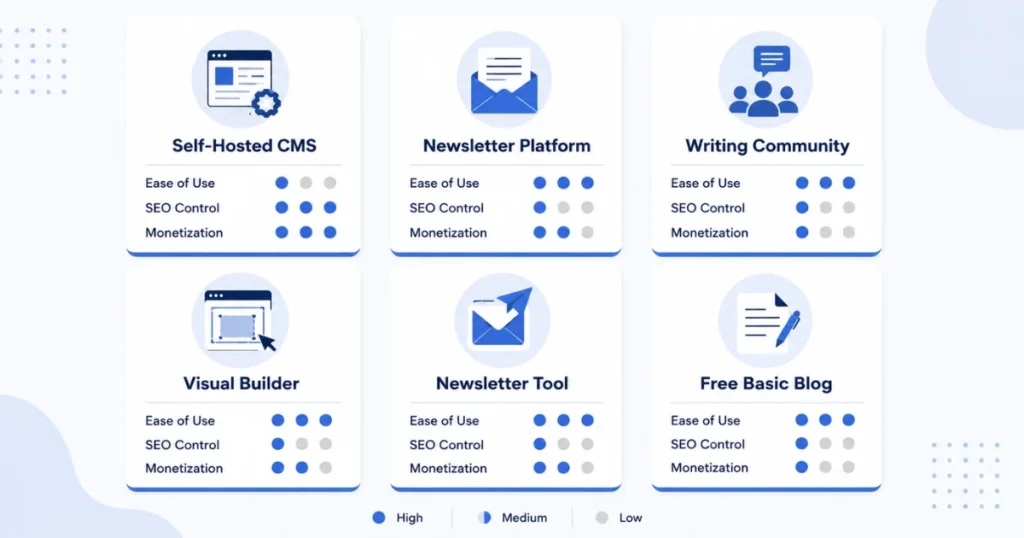
Choosing the wrong blog platform is not a fatal mistake. But this choice will certainly take your time, money, and even motivation to blog since it is annoying to work with uncomfortable software while you just want to share ideas.
Let’s list the platforms that really matter in 2026 and are used in practice, not from the marketing pages.
Read More: How to Start a Blog and Make Money From It
WordPress.org (Self-Hosted) – The One I Eventually Chose
This is the platform that runs roughly 40% of the internet. And it’s not surprising. But I must confess, I had a bad first experience with it.
I bought hosting from a budget provider, installed WordPress and a free theme, and within a week my website was loading in almost 8 seconds. Google didn’t like it. Nor did my visitors. I was losing viewers before they even reached my homepage.
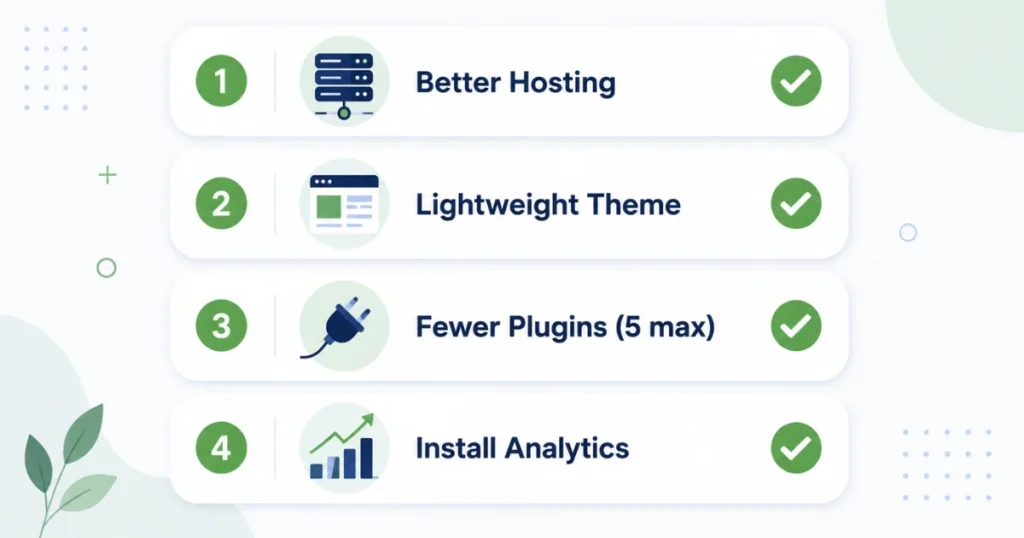
Here are the real steps I took to fix that:
- Step 1. Get a better hosting. I started off with SiteGround but then switched to a WordPress optimized hosting service by Hostinger. It loaded within 2 seconds.
- Step 2: Pick a basic theme. Currently, I use GeneratePress. No animations whatsoever and no sliders to delay loading time.
- Step 3: Have only the needed plugins installed. In the first month of blogging, I installed 14 plugins because each YouTube tutorial recommended one. The site became extremely slow. I reduced the number of plugins to 5, including Yoast SEO, WP Rocket, Wordfence, a contact form plugin, and an image optimiser (ShortPixel).
- Step 4: Have Google Search Console and Analytics installed right away. I cut plugins down to 5: Yoast SEO, WP Rocket, Wordfence, a contact form plugin, and an image optimiser (ShortPixel).
- The upside of WordPress? You own everything. Your content, your design, your monetisation — nobody can shut you down or change the rules on you overnight. That ownership piece matters a lot once your blog starts making money.
- The downside? There’s a real learning curve, and things do occasionally break (I once updated a plugin, and my entire homepage turned into an error message for two hours).
Ghost – Not Bad at All for Anti-Crowd Writers
Tired of all the work involved in using WordPress plugins, I decided to give Ghost a try for roughly eight months on another, niche site.
The Ghost editor looks like it was built for writers, not software engineers. It’s free of distraction and easy to use and if you just want a simple tool to type with, without the bother of a crowded dashboard, you might want to try it out. I appreciated the fact that Ghost offered some built-in tools for creating newsletters and memberships right off the bat. Setting up a paid tier for my newsletter took me roughly twenty minutes compared to the whole weekend. I’d need to find the proper plugins on WordPress.
The bad news: you can’t host Ghost easily for free unless you know how to do it technically, and the Ghost Pro subscription starts at $9/month for a basic plan, quickly becoming much more expensive if you have many subscribers. For a hobby blog, this seemed to be too much. But for a newsletter-based business, this was perfect.
Substack – Perfect for Newsletters but not quite a Blog in the Strictest Definition
I tried out Substack in one of my personal essay-writing projects. It was really, really easy to use — you sign up, you write and hit “send,” and it goes straight into people’s inboxes. There’s no hosting, no plug-ins, no set-up whatsoever!
There’s one catch about Substack that most people won’t tell you about right off the bat — Substack controls part of your connection with your readership. Your success depends on their algorithm and discoverability features, which evolve constantly. Also, moving away from Substack down the line is not as easy as I would have liked — exporting subscribers and posts becomes difficult because of formatting issues, among others.
Good for: those who will be writing strictly through newsletters. Bad for: those who need an actual searchable and SEO-friendly blog.
Medium – Quick to Begin, Difficult to Sustain
To be honest, Medium was where I first started my blog way back when. You can get your blog published in literally five minutes after signing up. Nothing at all in terms of design choices, hosting, or technical stuff.
Here’s the problem that I faced: the content I created didn’t exist outside of Medium’s ecosystem. When Medium tweaked its Partner Program payments system (which is something they do on occasion), I saw my payments instantly reduce without any prior notice. I couldn’t control that.
Still, Medium remains a good platform to get more readers or republish your work.
Squarespace and Wix – Great for Visual Brands, but not for Active Blogging
Squarespace helped me create my friend’s photography portfolio website, and let me tell you – that was beautiful without much work needed at all. Drag and drop it in, and that’s it. If you don’t need an active blog but want a nice-looking portfolio or website, go for Squarespace or Wix.
However, if you need a real blogging site, which means posting regularly, customizing SEO, and organising content – then both these sites are quite limiting compared to WordPress and Ghost.
Blogger – Alive, Free, but No Longer Growing
Yes, Google’s Blogger is still out there. I used it back in 2016 for one of my minor projects. It is absolutely free, very easy to use, and really good enough to create a blog with no intention of monetising it. However, its development seems to have stopped because of its outdated design and lack of competition with modern blogging sites.
And So What’s The Actual Decision?
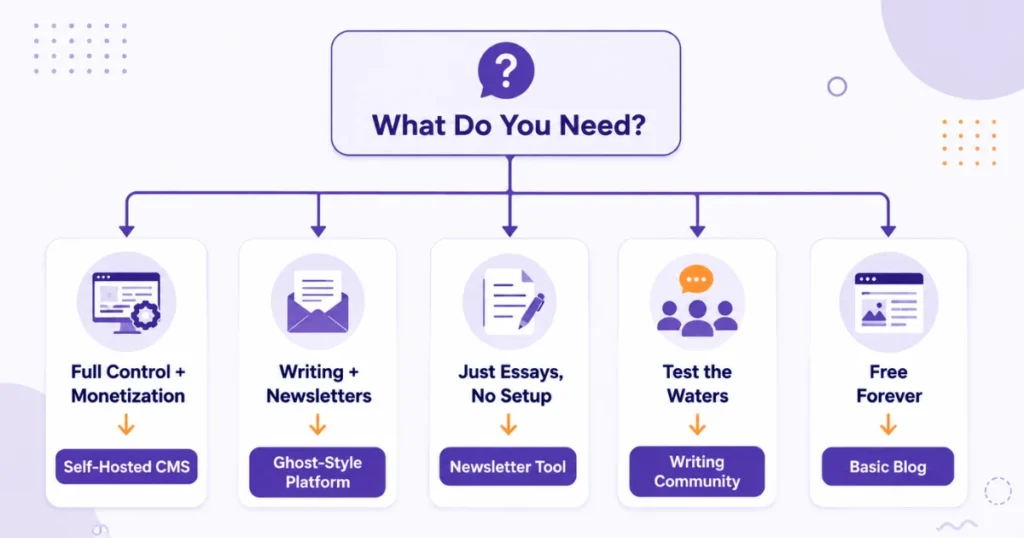
That’s the truth of the matter, based on my personal experience:
- Need full control, long-term gains, and potential monetization? You should consider going with a self-hosted WordPress. It may be hard at first but I promise you, it is going to be worth it.
- Want simple writing included with newsletters and memberships? Then use Ghost.
- Need to just send out your essays without all the hassle of having a blog set up? Use Substack.
- Need to feel out the water, need no setup whatsoever and are okay with limited control? Then try using Medium.
Read More: AdSense Approval Tips for New Bloggers
Just playing around and not quite sure what you’re after? Blogger is totally free.
Mistakes I Would Warn My Former Self About
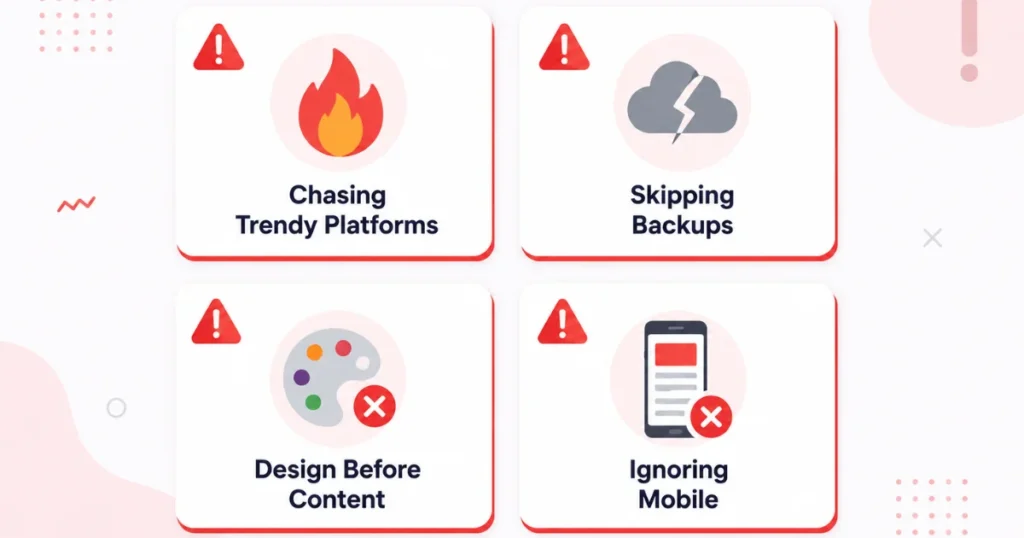
Do not choose a platform according to the current trendiness. One time, I opted for an advanced platform due to a positive review from a YouTuber. After six months, it ceased operation of one of its crucial features which resulted in migrating everything yet again.
Do not neglect backups. Once, I failed to back up my content because I thought my host did that for me. It did not. Nowadays, I utilize UpdraftPlus on WordPress for regular backup of my content on a weekly basis as well as make monthly backups manually.
Do not concentrate on the look until your content is created. I wasted two whole weekends choosing the “perfect” theme without creating even ten posts. Your readers will value your writing far more than any colors you choose for your site.
Do not disregard mobile usability. At the moment, over 60% of my blog’s traffic comes from mobile devices. Once I was using a theme which had an impeccable design on desktops but a dysfunctional mobile menu for almost a month.
Final Thoughts
And really, there’s no “one best way” — there’s the best way to accomplish your own individual purpose. That might not be a sexy or exciting answer, but it’s the truth.
If you’re just getting started and aren’t sure what you’re looking for, here’s a brutally honest piece of advice: Try something free and low-commitment (a WordPress site on budget hosting, or maybe Ghost, if newsletters tickle your fancy) and write for three months straight. You’ll figure out exactly what you need from experience — much more than yet another comparison article will teach you — like this one.
The tools are irrelevant when compared to just showing up and writing the next post.And trust me, I learned that the hard way, sitting at that kitchen table three years ago.
FAQs
What’s the best platform to blog on?
Well, if you need total freedom and the real long-term earnings potential, you cannot go wrong with self-hosted WordPress. Ghost would be your perfect choice if you love writing and want to have newsletters on your site, without any plugin issues. If you don’t want to worry about anything, you can use either Substack or Medium and simply start blogging right away. But seriously, the platform you should pick is the one that will make you blog consistently.
Can I earn $1000 from blogging?
Yes, of course, you can make $1000 per month blogging. Most bloggers I know need 8-12 months of consistent posting to make any money. Bottom line, blogging usually earns via a mixture of ads, affiliate marketing and products and rarely only through one source. The main problem is getting enough traffic, which is really what bottlenecks everything else.
Which blog site should I choose for starters?
Blogger and Medium would be easiest for absolute starters since there would be zero configuration needed, learning curve or costs – both sites offer their services indefinitely for free. On the other hand, if you plan to stick with blogging for quite some time, go with WordPress right from the start – transferring later between different platforms is a pain. I know, I made this mistake after growing out of Blogger.
Is it possible to create a blog for free?
Yes, it is very much possible. There are plenty of platforms offering blogging for free – among them Blogger, Medium and the free version of WordPress.com. I managed to keep my Blogger blog for almost a year without ever paying anything. The drawback is that you won’t have much choice in the matter of customisation and branding.
Can blogs earn money?
Well, blogs do indeed earn money; however, this happens when they attract traffic to their site, and they use tools like Google AdSense. In essence, this is how they make money from advertisements, affiliate marketing, sponsorships, and even from selling their own product. Well, there is no shortcut for earning money; it does take time and patience.
What are the most popular blogs?
According to my observations, the most popular blogs usually deal with technology, finance, cooking, and personal development. For example, it could be blogs such as TechCrunch, The Verge, and Nomadic Matt in the sphere of travelling. The popularity of these sites is not based on luck but is the result of constant blogging over the years with a defined niche. The popularity of small blogs arises similarly, but on a smaller scale – with one reader at a time. When choosing a niche, you should consider the topic which you will continue blogging about despite the lack of readership.
Where should I begin with my first blog?
Keep it basic; choose something you’re passionate about, otherwise, you won’t last past the second month like I nearly didn’t. Find budget hosting (Hostinger for me) and install WordPress or just use Blogger if you’re not ready to put money in yet. Write your first five posts before thinking about the design and all the other stuff; content is king when you’re getting started. Just click publish and learn along the way because no one’s first blog looks anything like their fiftieth post.
How much do you earn per 1000 views for your blog?
It really depends on your area of specialisation and how you have arranged your advertising, but in my experience with Google AdSense, it is anything from one dollar to ten dollars per 1000 views, which is referred to as the RPM (Revenue per Thousand Impressions). Finance blogs, insurance blogs and tech blogs earn more from each impression than other types of blogs, such as lifestyle or entertainment blogs, sometimes even as much as fifteen to twenty dollars RPM. It also makes a difference where your visitors are coming from; the more you get traffic from America, Britain and Canada, the more you earn.
Is Ai replace bloggers?
I believe not, not entirely. For one, I myself use AI when I need to boost my work or correct some weird sentence, but those articles that make people read until the end are those which include experience — either an example of some of my personal mistakes or numbers I’ve calculated on my own. Google itself has become quite good at recognising the soulless articles that were written only by AI and ranks such articles much lower, so those blogs do not last very long. The truth is probably that AI will replace the lazy blog and leave the bloggers who include their own ideas and testing behind.
Which is the richest blogger?
Well, there’s never been one clear-cut answer for “the richest blogger.” It truly depends on who you consider to be a blogger. While Arianna Huffington and her empire Huffington Post have gained attention, so has Chiara Ferragni and her The Blonde Salad blog that made millions of euros at its peak. In terms of personal blogs, some of the names you can hear are Pat Flynn and Pinch of Yum duo.