
The first blog I ever monetised seriously wasn’t the one I expected.
I had two blogs running at the same time — one about general productivity tips (something I genuinely cared about), and one I’d started almost experimentally about budgeting on a variable income (something I’d lived through personally as a freelancer). I’d written roughly the same number of posts on both.
Twelve months in, the productivity blog was pulling maybe Rs. 800 a month equivalent in AdSense. The budgeting blog was doing nearly eight times that — plus affiliate commissions I hadn’t even set up properly yet.

Same effort. Same consistency. Completely different results.
The difference wasn’t the writing quality or how often I posted. It was the niche. Some blog niches are structurally more profitable than others — not because they’re more interesting, but because of who reads them, what they’re looking for, and what they’re willing to spend.
That realisation changed how I thought about blogging entirely.
Why Your Blog Niche Ideas Determine Your Earning Ceiling
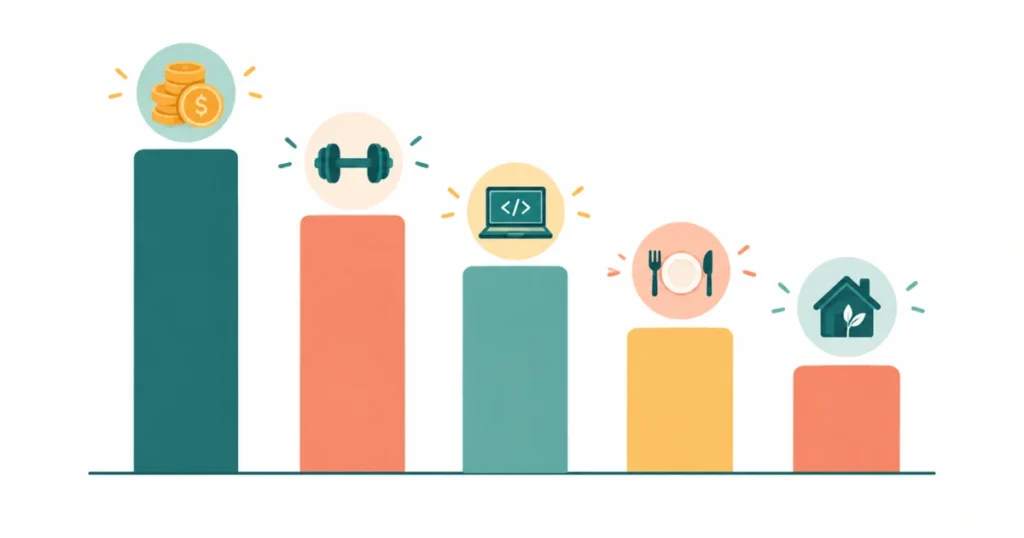
A blog niche determines your income ceiling more than almost any other factor — including writing quality, posting frequency, or design.
Here’s why: different niches attract readers at different stages of a spending decision. A personal finance reader actively searching for “how to pay off debt faster” is often moments away from signing up for a tool, buying a course, or taking out a product. A reader browsing general lifestyle content is in discovery mode — they’re not necessarily looking to spend anything.
Ad networks price this difference precisely. In digital advertising, RPM (revenue per thousand impressions) — the amount a blog earns per thousand page views — varies enormously by niche. A personal finance blog might earn $25–$50 RPM on a premium network. A general lifestyle blog might earn $4–$8. Same traffic, very different outcome.
Affiliate commissions follow the same logic. Software products in the B2B and finance space commonly pay 20–40% recurring commissions. A single referral can generate income for months. Compare that to a 3% one-time Amazon commission on a kitchen gadget.
None of this means you should pick a niche you hate. It means going in with open eyes about where the structural advantages lie.
The Niches That Consistently Earn
These aren’t the only niches that work — but they’re the ones with proven, durable income potential across multiple monetization channels.
1. Personal Finance

Why it earns: Personal finance attracts readers who are actively trying to change their financial situation — paying off debt, building savings, investing for the first time, navigating a job change. That active intent translates directly to conversions.
Income sources: Affiliate programs for budgeting apps (YNAB, Mint alternatives), investment platforms, credit cards, insurance, and online banking. RPM on ad networks like Mediavine or Raptive sits significantly higher than most other niches. Sponsored post rates are strong.
What makes it work: Specificity. “Personal finance” is too broad to compete in as a beginner. “Budgeting on a single income as a stay-at-home parent” or “paying off student loans on an entry-level salary” — those are angles where a focused blog can rank against much larger competitors.
The real challenge: Google applies YMYL (Your Money or Your Life) quality standards here. It wants to see real credentials or demonstrable lived experience. Anonymous, generic finance content doesn’t rank well. Your experience is the advantage — use it explicitly.
Estimated RPM range (display ads): $18–$55 on premium networks. One of the highest across all blog categories.
2. Health, Fitness, and Wellness
Why it earns: Health-related searches represent some of the highest search volumes on the internet. People search for health information constantly, across all demographics, year-round.
Income sources: Fitness equipment affiliate programs, supplement brands, wellness apps, online coaching platforms, meal plan digital products. Video content alongside blog posts does especially well in this niche on YouTube, which can add a separate income layer.
What makes it work: Again — specificity over breadth. “Fitness blog” is saturated. “Strength training for women over 45” or “managing IBS through diet” or “fitness for people who hate the gym” — those are the angles that build real audiences.
The real challenge: The same YMYL rules apply here as in finance. Health content that makes claims without backing them up gets penalised by Google’s quality systems. Lean into personal experience: “what worked for me, documented” outperforms “authoritative-sounding generic advice” every time on a new blog.
Estimated RPM range: $12–$35 on premium networks. Variable by sub-niche.
3. Software, Tech Tools, and SaaS Reviews
Why it earns: People searching for software comparisons and reviews are typically in the final stage of a purchasing decision. They’ve already decided they need a tool — they’re choosing which one. That’s incredibly high buying intent.
Income sources: SaaS affiliate programs are some of the most generous available. Many pay 20–40% recurring commissions — meaning if your referral keeps paying their monthly subscription, you keep earning. One active referral to a $100/month tool at 30% commission earns you $30/month indefinitely.
What makes it work: Honest, detailed reviews that include real use cases, pricing breakdowns, and genuine drawbacks. Readers have learned to spot affiliate content that glosses over negatives to protect the commission — the reviews that convert best are the ones that tell you exactly when a tool isn’t the right choice.
The real challenge: The tech landscape changes fast. Tools get updated, discontinued, or repriced. Content requires regular maintenance to stay accurate and rankable.
Estimated RPM range: $15–$40 on premium ad networks, but the bigger earner in this niche is usually affiliate commissions, not display ads.
4. Food and Recipes (with a Specific Angle)
Why it earns: Recipe content has enormous search volume, excellent Pinterest shareability, and a loyal reader base that returns regularly. Food blogs with 50,000+ monthly sessions can earn well from premium ad networks alone.
Income sources: Display advertising is the primary earner once traffic grows. Affiliate links to kitchen equipment, pantry subscriptions, and meal kit services. Digital products like recipe ebooks or meal plans. Some food bloggers branch into sponsored posts with brands.
What makes it work: A specific dietary or lifestyle angle. “Budget dinners for a family of five” attracts a different reader than “vegan weeknight meals for busy professionals” — and both beat a general “food blog” at building a consistent audience.
The real challenge: Food blogging is genuinely competitive. SEO takes longer here because the authority sites (AllRecipes, BBC Good Food, etc.) are entrenched. The path in is through specific sub-niches and genuinely helpful recipe content — not content that exists just to host ads around it.
Estimated RPM range: $10–$30 on premium networks, with significant upside once traffic crosses 50,000 monthly sessions.
5. Online Business, Blogging, and Making Money Online
Why it earns: High-intent audience. Readers in this space are actively looking for tools, courses, and strategies to build income. The affiliate ecosystem is rich — web hosting, email marketing platforms, course creation tools, and productivity software all have strong programs.
The honest caveat: This niche has the highest E-E-A-T barrier. Readers and Google both want to see that you’ve actually done this — not just researched it. A blog about making money blogging is most credible when you’re actively doing it and sharing the real numbers, the failures, the timeline.
If that’s you (or becoming you), this niche compounds exceptionally well. Each post demonstrates the very skills you’re writing about.
Estimated RPM range: $15–$45 on premium networks, with very strong affiliate income potential.
6. Parenting and Family
Why it earns: Parenting content has relentless, evergreen demand. Every year brings new parents searching the same questions the generation before them searched. High return readership, strong affiliate potential for baby products and educational tools, and decent display ad RPMs.
What makes it work: Specific life stages or specific challenges. “First trimester what to expect” serves a different reader than “managing a toddler with sensory sensitivities” — both narrower than “parenting blog” and both buildable as a focused content base.
Estimated RPM range: $8–$22 on premium networks. Lower than finance or tech, but strong volume compensates.
Niches That Beginners Get Wrong

General lifestyle blogs. The appeal is obvious — you write about whatever you want. The problem is that Google can’t categorise the site clearly, you compete in multiple niches without authority in any, and readers have no specific reason to return. A lifestyle blog can work, but it typically earns less per visitor and takes longer to build than a focused niche.
“Make money online” without the credentials. Starting a blog about blogging income when you have no blogging income is a credibility gap that readers can sense immediately. Either document your journey honestly from the start (“I’m building this in public and I’ll share real numbers”) or build real results first.
Passion niches with no search demand. There’s no shortage of interesting topics that nobody Googles. Before committing, spend thirty minutes in Google’s autocomplete and a free tool like Ubersuggest — check that the questions you’d want to answer are actually being searched.
High-volume niches without a specific angle. “Fitness blog” is not a niche. “Fitness for people recovering from lower back injuries” is. The second one is harder to write for and slower to start — but it’s the one you can actually build topical authority in as a new blog.
How to Pick the Right One for You
The niche question has two parts that most guides treat as one: what earns and what you can actually build.
Here’s a framework that avoids both the “chase the money” trap and the “follow pure passion” trap:
Step 1 — List what you know well or have lived through. Not what you’re vaguely interested in — what you actually know, have done, or have navigated. A specific job, a financial situation, a health journey, a parenting experience, a set of tools you’ve genuinely used.
Step 2 — Check which of those topics have real search demand. Use Google autocomplete and a basic keyword tool to validate. You’re looking for consistent monthly searches across the kinds of questions you’d want to answer.
Step 3 — Cross-reference with income potential. Does the niche have a clear monetization path? Are there affiliate programs in the space? Would ad networks pay decently for this audience? Is there a digital product you could eventually build?
Step 4 — Pick the most specific version of your best option. Not “health blog” — “recovery nutrition for distance runners.” Not “personal finance” — “building savings on a part-time income.”
Step 5 — Commit to 90 days of content before evaluating. Most beginner bloggers make the mistake of switching niches when results are slow, when actually the content just hasn’t had time to index and rank. Give your niche a real test period before drawing conclusions.

If you want a concrete sense of what your shortlisted niche could realistically earn at different traffic levels, the Blog Income Calculator at The Income Pilot lets you model income range by niche, traffic, and monetization type.
And if you’re still working through the niche decision itself, How to Choose a Blog Niche walks through the full decision framework step by step.
A Note on the “Saturated Niche” Myth
One thing I hear constantly from beginners: “But isn’t personal finance / food / fitness already too saturated?”
Here’s the honest answer: the top-level keyword competition is fierce. The BBC and NerdWallet and Healthline aren’t going anywhere. But search engines don’t return one answer for every query — they return ten, spread across hundreds of millions of different search terms.
A blog called “Budgeting in Your First Year as a Nurse in the UK” won’t compete with NerdWallet for “personal finance tips.” It will rank for dozens of very specific queries that NerdWallet has never thought to write about — and it will build a loyal audience of exactly the people it’s written for.
The most profitable blogs aren’t the biggest. They’re often the most specific.
Once you’ve chosen your niche, the next step is actually setting it up properly and understanding how to earn from it from day one. Here’s the complete guide to starting a blog that makes money →
Frequently Asked Questions
Q1: Which blog niche makes the most money?
Personal finance consistently ranks as the highest-earning blog niche based on display ad RPM rates and affiliate commission potential. Technology and software review blogs come close, particularly because of recurring SaaS affiliate commissions. That said, earning depends heavily on execution, specificity, and consistency — a focused food or fitness blog with strong traffic can out-earn a thin finance blog with low engagement.
Q2: Can a beginner make money blogging in a competitive niche?
Yes, but the path in is through specificity rather than competing head-on. A new blog about “budgeting as a teacher” can rank for dozens of specific searches that large personal finance sites don’t cover. The key is targeting specific, lower-competition questions within the broader niche while building topical authority over time.
Q3: How much traffic does a blog need to start earning money?
Display advertising typically requires at least 10,000–25,000 monthly sessions before meaningful earnings begin — and premium ad networks like Mediavine require 50,000 monthly sessions. Affiliate income can start much earlier, sometimes with a few hundred targeted monthly visitors, if the content is specifically aligned with buying decisions. Email list building from day one helps monetize before traffic scales.
Q4: Is it too late to start a blog in 2026?
It is not too late. Search engines still surface new, focused blogs in niches they demonstrate authority in. The difference from earlier years is that thin, generic content no longer ranks. A blog with genuine first-hand experience, specific sub-niche focus, and properly researched SEO can build significant traffic — it just takes longer than it did five years ago, typically 9–18 months for meaningful organic reach.
Q5: What are the best affiliate programs for new bloggers?
For personal finance: YNAB, credit card issuers, investment platforms, and comparison sites. For tech: web hosting companies (Hostinger, SiteGround), email marketing tools (ConvertKit, Beehiiv), and SaaS tools in your niche. For food: meal kit services and kitchen equipment retailers. For online business: course creation platforms (Teachable, Podia), Canva, and Gumroad. Start with one or two programs that genuinely connect to your content.
Q6: Should I pick a niche based on passion or profit?
The practical answer is: both matter, but differently. Passion keeps you publishing when results are slow — and the slow phase is real and unavoidable. Profit potential determines your income ceiling once you have traffic. A niche where you have genuine knowledge or experience AND a clear monetization path is the most defensible starting point. Pure passion without demand is a diary. Pure profit motive without any real interest usually leads to burnout before the traffic arrives.
Q7: How long before a niche blog starts earning?
Most bloggers see their first small affiliate income or ad earnings between months four and eight, assuming consistent publishing and basic on-page SEO. Meaningful income — something worth reporting — typically comes at months nine to fifteen for most niches. Personal finance and software review blogs tend to monetize earlier because of high buying intent. Lifestyle and general content blogs take longer because they rely more on volume.
Q8: What are some underrated blog niches that make money?
Several niches earn well but receive less hype: pet care (high affiliate potential, loyal readership), personal development for specific audiences (new managers, career changers, new graduates), home improvement and DIY (strong seasonal demand, good affiliate programs), frugal living (engaged audience, product-specific affiliate opportunities), and niche hobby content with clear product ecosystems (photography, running, cycling, crafts).
Q9: Do I need to show my income to blog in the “make money online” niche?
Not necessarily — but you need to demonstrate credibility through documented experience. Income reports are one way to do that. Another is sharing the process in detail: what you tried, what worked, what didn’t, what the timeline looked like. Readers in this niche are highly skeptical of generic advice from people who haven’t done the thing. Specificity and honesty are the credibility signals that matter most.
Q10: Can I change my blog niche if it isn’t working?
Yes, and many successful bloggers have done exactly that. A niche pivot is easier in the first six months before deep content investment, but even later pivots are workable. The skills you build — writing, SEO, understanding your reader — transfer completely. If you do pivot, keep your best-performing existing content and redirect any lost traffic through internal links to your new direction.