
Three years ago, I was running a blog that got around 8,000 visitors a month and making exactly $47 from AdSense. I remember logging into my dashboard, staring at that number, and genuinely wondering if I’d been wasting my evenings for a year and a half.

What nobody told me was that ad revenue is one of the worst ways to monetize a blog when you’re starting out. You need hundreds of thousands of pageviews before it adds up to anything meaningful.
The creators actually making money? They had two, three, or four income streams — and most of them weren’t ads.
This guide covers the online side hustles that actually work for bloggers and creators in 2026, based on what I’ve tried, tested, and seen work for people across niches. No fluff, no “just start a dropshipping store” advice. Real, buildable income streams.
Affiliate Marketing — The Fastest Path to Your First Real Paycheck
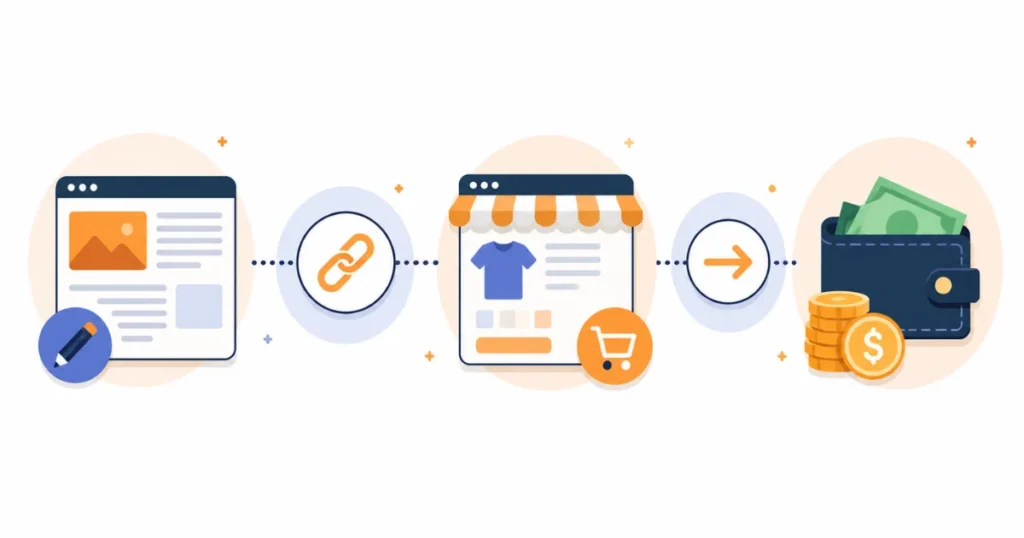
If you write about anything people buy — software, books, gear, courses — you can earn a commission when readers buy through your link. That’s the entire model.
I made my first $200 online through affiliate marketing before I made anything from ads. I wrote a comparison post between two email marketing tools, linked to one with an affiliate link, and someone signed up for a paid plan. Commission landed in my account three weeks later.
It felt disproportionately exciting.
How to get started:
- Join Amazon Associates (easiest to start, but lower commission rates — typically 1–4%)
- Find dedicated affiliate programs in your niche — these often pay 20–50% per sale for digital products
- Look at what tools, products, or services you already use and recommend naturally
- Search “[product name] affiliate program” — most SaaS products have one
- Write honest, experience-based reviews and comparisons — not just “Top 10” lists you copied from somewhere
Where to find good programs: ShareASale, Impact, PartnerStack (great for SaaS), and CJ Affiliate are solid networks. ConvertKit, Notion, Canva, and most niche tools have in-house programs that pay well.
The mistake I made: I used to cram affiliate links into posts where they didn’t belong. Readers can tell. The highest-converting affiliate content is genuinely helpful — tutorials, comparisons, or “what I actually use” posts.
Selling Digital Products — The Income Stream That Keeps Paying You Back
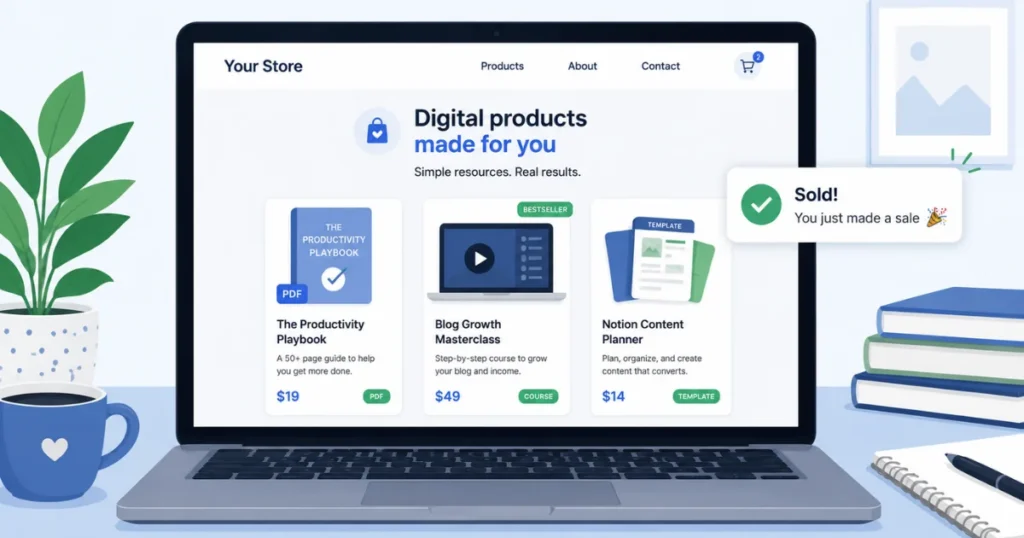
Once you understand what your audience struggles with, you can package your knowledge into something they’ll pay for.
This one took me a while to try because it felt presumptuous — like, who am I to sell something? But the first time someone paid $19 for a template I built in Notion and used myself, that mental block evaporated fast.
What works as digital products for creators:
- Templates — Notion templates, Canva social media templates, email newsletter templates
- Ebooks and PDF guides — Niche-specific guides that solve one specific problem
- Preset packs — Lightroom presets for photographers, audio presets for podcasters
- Swipe files / resource libraries — Collected prompts, scripts, checklists
- Mini-courses — A 4-part email course or a short Loom video series
Tools to sell them: Gumroad (zero upfront cost, takes a small transaction fee), Lemon Squeezy (great for digital goods), or Kit (formerly ConvertKit) if you already use it for email — you can sell directly from there.
The key advantage over affiliate marketing: you set the price, you keep most of the revenue, and there’s no middleman deciding your commission rate. A $29 template selling 50 times a month is $1,450. Without you doing anything extra once it’s built.
READ MORE: Using AI to Create and Sell Digital Products
Freelance Writing and Content Services — Turn Your Skills Into Client Work

Here’s one that most creators overlook because it feels like “a job, not passive income.” But done right, freelancing can generate more money faster than any passive stream.
I started offering content writing services to SaaS companies about two years into blogging. My blog was my portfolio. Brands could see exactly how I wrote and whether my work performed — because I had traffic data and real posts to show.
That’s the advantage bloggers and creators have over random Upwork freelancers: you have proof of work, publicly visible.
Services you can offer as a creator:
- Blog post writing and SEO content
- Social media content and caption writing
- Newsletter ghostwriting
- YouTube script writing
- SEO audits and keyword research
- Pinterest or LinkedIn management
Where to find clients: Contra and Toptal for higher-end clients, LinkedIn for direct outreach, X (Twitter) for building visibility in your niche, and your own newsletter or blog for inbound leads.
Realistic rates: Starting bloggers with a portfolio can charge $75–$150 per article. Experienced creators with demonstrable SEO results can charge $300–$800+ per piece. Ghostwriting (writing content published under someone else’s name) typically pays more.
One thing I’d do differently: Start pitching clients earlier. I waited until I felt “ready.” There’s no ready. Send three pitches today.
Newsletter Monetization — Your Email List Is an Asset Most Creators Ignore
A lot of bloggers build email lists and then… don’t do anything with them.
Your newsletter is one of the most underrated side hustles available. There are three main ways creators monetize newsletters in 2026:
1. Paid subscriptions — Platforms like Substack, Ghost, or Beehiiv let readers pay for premium content. Even a free list of 2,000 engaged subscribers can convert 2–5% to paid, which adds up faster than you’d think.
2. Sponsorships — Brands pay to be featured in your newsletter. Rates depend on your open rate and niche. A newsletter with 5,000 subscribers and a 40%+ open rate in a B2B niche can charge $200–$600 per sponsored mention.
3. Affiliate links inside newsletters — Recommend tools you use, include your affiliate link. Warm audiences convert much better than cold blog traffic.
The tool I use: Beehiiv (great for monetization features) and Kit both work well. Ghost is excellent if you want full control and a paid subscription setup.
Start capturing emails on day one. The bloggers who skip this almost always say it’s their biggest regret.
Creating and Selling Online Courses — For When You’re Ready to Go Deeper
Courses sit at the more effort-intensive end of the spectrum, but also the higher-revenue end.
You don’t need to build a massive 40-hour course. A focused, result-driven mini-course on one specific skill can sell better than a bloated mega-course.
The creators I’ve seen succeed with courses almost always do one thing right: they validate before they build. They either pre-sell the course (take payment, then create the content), or they run a live cohort first to understand what people actually need.
Platforms: Teachable, Podia, and Kajabi are popular all-in-one options. For simple, lower-cost courses, Gumroad works fine. For community-based learning, Skool is growing fast.
What to charge: Mini-courses ($47–$197), standard courses ($197–$497), cohort-based programs ($500–$2,000+). Don’t underprice — it signals lower quality.
Consulting and 1-on-1 Coaching — For Creators Who Like Working With People
Once you’ve shown publicly that you know what you’re doing, people will pay to access your brain directly.
This isn’t for everyone. Some creators hate jumping on calls. Fair enough. But if you don’t mind it, a single consulting client at $200/hour can equal a month of AdSense revenue for a mid-sized blog.
You don’t need a coaching certification. You need a documented result — something you’ve done that others want to replicate. Traffic growth, monetization, audience building, content strategy — any of these can become a consulting offer.
How to offer it simply: A Calendly link on your site with a 30-minute “strategy call” at a flat fee. That’s it. See if people book. The market will tell you fast whether your positioning works.
Licensing Your Content — The Quiet Side Hustle
This one flies under the radar.
If you create original photography, music, illustrations, or video clips, you can license them passively through platforms like:
- Unsplash+ / Getty — for editorial photography
- Pond5 / Shutterstock — for video footage and music
- Creative Market — for design assets, fonts, templates
I know a travel blogger who earns a few hundred dollars a month from photos she took years ago, just sitting in a Shutterstock portfolio. Zero ongoing effort after upload.
Not a primary income for most people, but a genuinely passive drip that works in the background.
Mistakes That Will Slow You Down (Or Stop You Entirely)
Trying to do all of these at once. Pick one, get it to work, then add the next. Doing five things half-heartedly beats nothing, but doing one thing well beats everything.
Waiting to “build an audience first.” Some income streams require a big audience. Most don’t. Freelancing, consulting, and affiliate content can work with a relatively small blog if the niche is right.
Underpricing everything. This is rampant among new creators. Low prices don’t make you more competitive — they just signal that you don’t value your work. Charge more. Some clients will say no. The right ones won’t.
Ignoring email. I’ll say it again because it matters: no algorithm owns your email list. Social platforms come and go. Your list is yours.
Optimizing for passive income before active income. Passive sounds better, but it takes longer to build. Freelancing pays this week. Passive income pays in months or years. There’s a time for both — the order matters.
Where to Actually Start Online Side Hustles This Week
If you’re reading this and feeling overwhelmed, here’s what I’d actually do:
- Today: Identify one product, tool, or service you already use and genuinely recommend. Find its affiliate program and sign up.
- This week: Write one piece of content where that recommendation fits naturally — a tutorial, a comparison, a “what I use” post.
- This month: Set up an email capture form on your site and send at least two newsletters to whoever subscribes.
- Next month: Outline one simple digital product you could build from your existing knowledge.
That’s a full quarter of momentum in four steps. None of it requires going viral, having a massive following, or quitting your job.
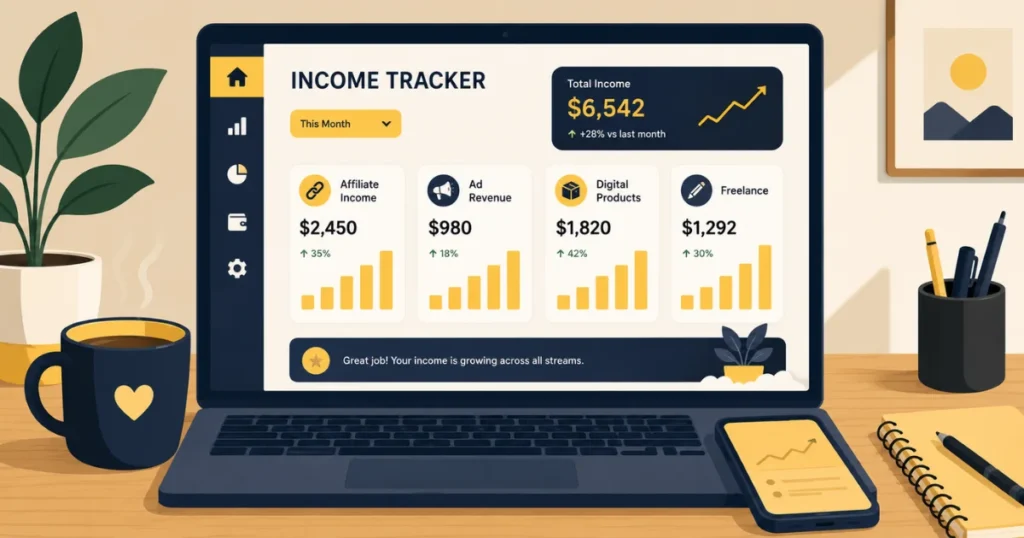
The creators making consistent money online aren’t doing anything magical. They’re just stacking multiple small income streams, staying consistent, and not giving up in the slow months.
READ MORE: How to Automate Your Online Income Step by Step Guide
The slow months are part of it. Push through them.
Frequently Asked Questions
Q1: Do I need a large audience to make money as a blogger or creator?
Not necessarily. Freelancing, consulting, and niche affiliate marketing can generate real income with even a few hundred engaged readers. A small, trust-based audience often converts better than a large, disengaged one.
Q2: Which side hustle pays the fastest for beginners?
Freelance writing and content services typically pay the fastest because you’re exchanging time and skills for direct payment — no traffic threshold or audience size required. You can land a client and invoice within weeks of starting.
Q3: Is affiliate marketing still worth it in 2026?
Yes, but the bar has risen. Generic “top 10 products” lists don’t rank or convert well anymore. What works is experience-based content — honest reviews, side-by-side comparisons, and tutorials where the affiliate recommendation fits naturally.
Q4: How much can I realistically earn from a newsletter?
It depends heavily on your niche and open rate. A B2B or high-interest niche newsletter with 3,000–5,000 subscribers and strong open rates can generate $500–$2,000/month from sponsorships alone, plus affiliate commissions on top.
Q5: What’s the best platform to sell digital products?
Gumroad and Lemon Squeezy are the most beginner-friendly — low setup friction, no monthly fees until you scale. For course hosting, Podia and Teachable are solid mid-range options. If you want full control, Ghost handles both content and products well.
Q6: Can I do freelance writing without prior client experience?
Yes. Your blog posts are your portfolio. Start by writing 3–5 high-quality posts in your niche, then pitch brands, startups, or agencies in that niche directly. Your published work demonstrates your ability more than any client list.
Q7: How do I price my digital products or consulting?
A good starting point: look at what others in your niche charge and price in the middle of that range, then adjust based on response. Avoid pricing at the bottom — it often signals low quality. For consulting, charge what feels slightly uncomfortable. You’ll find your market quickly.
Q8: Should I focus on one side hustle or try multiple?
Start with one until you have some momentum — at least some consistent income or a clear process. Then add a second stream that complements the first. Most successful creators have 2–4 income streams, but rarely launch all of them at once.
Q9: How long before I see real income from these side hustles?
Freelancing: potentially within weeks. Affiliate marketing: 3–6 months of consistent content creation. Digital products: 1–6 months depending on audience size and marketing. Courses and newsletter monetization: usually 6–12 months to meaningful revenue. None of these are overnight, but all are realistic.
Q10: Do I need to disclose affiliate links on my blog?
Yes — this is a legal requirement in most countries including the US (FTC guidelines) and UK (ASA rules). Always include a clear disclosure at the top of posts containing affiliate links. Beyond being legally required, it’s the honest thing to do and readers tend to respect it.